The Unclaimed Inheritance: A Farmer's Fantasy in 2026
Digital farming games offer a compelling escape from urban fatigue, providing a powerful sense of agency through the simulated ownership of land, yet they highlight our deep-seated yearning for tangible purpose and connection to the earth.
I often find myself staring at the screen, my digital farmer watering parsnips under a pixelated sun, and I wonder: is this the closest I will ever come to owning a piece of the earth? In 2026, the fantasy of a letter arriving, bequeathing a neglected farm and a quiet life, feels more distant than ever. Video games promise us dragons and starships, but perhaps the most potent magic is the deed to a small plot of land, free and clear. Who among us hasn't, in a moment of urban fatigue, dreamed of trading spreadsheets for seed packets? Yet, here we are, in a world of digital leases and skyrocketing rents, living the pastoral dream through a screen. Isn't it strange that our greatest escapism is a simulation of the most fundamental human labour?
The Myth of the Inherited Acre
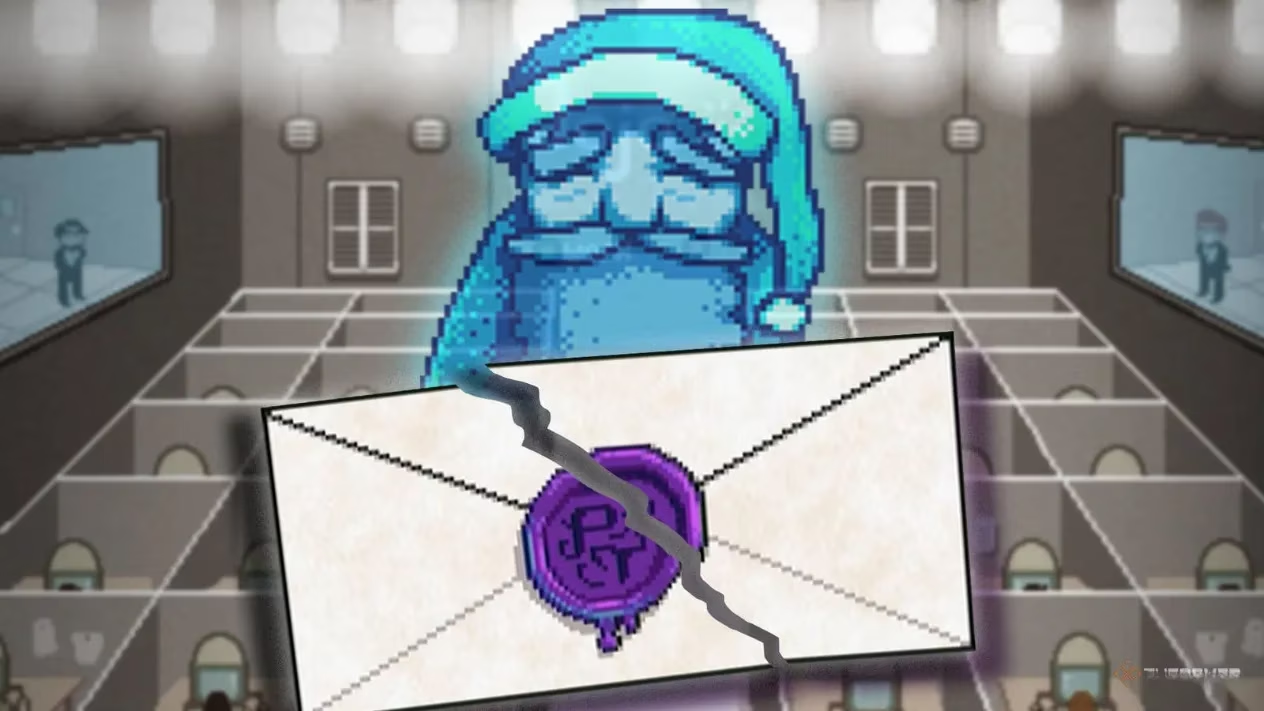
Let's be honest. The premise is a beautiful lie. "Any grandparents with a farm to spare, hit me up" isn't just a joke; it's a plea from a generation for whom property ownership is a statistical anomaly, not a family tradition. In 2026, inherited land is the stuff of legacy families or fortunate geography, not a universal daydream. For most of us, our lineage offers memories, not meadows. Would I even recognize a parsnip if it didn't have a pixelated label above it? The game simplifies the immense, backbreaking reality into satisfying progress bars and cheerful plinks. It sells us not on farming, but on agency—the profound, nearly extinct feeling of building something tangible from the soil up, season by season. Isn't that what we're truly inheriting in these games: not land, but a sense of unmediated purpose?
The Gravity of Our Daily Lives
So, the hypothetical letter arrives. A key to a new life in Stardew Valley or its tranquil cousins. Would I go? The fantasy is electric, but then I feel the weight of my own world. My friends, my routines, the specific way the light hits my apartment window in the evening—all of it forms a gravity well too strong for mere daydreams to escape. The game makes socializing with the village a charming mini-game; in reality, it would be the exhausting work of building community from scratch, while your muscles ache from a dawn you haven't seen in years. We romanticize the escape, but could we endure the isolation? I'd like to think I'm brave enough. I've let digital raccoons put me in debt for a desert island getaway, after all. But that's the safety of the simulation: the stakes are energy points, not existential dread.
The Sacred in the Soil
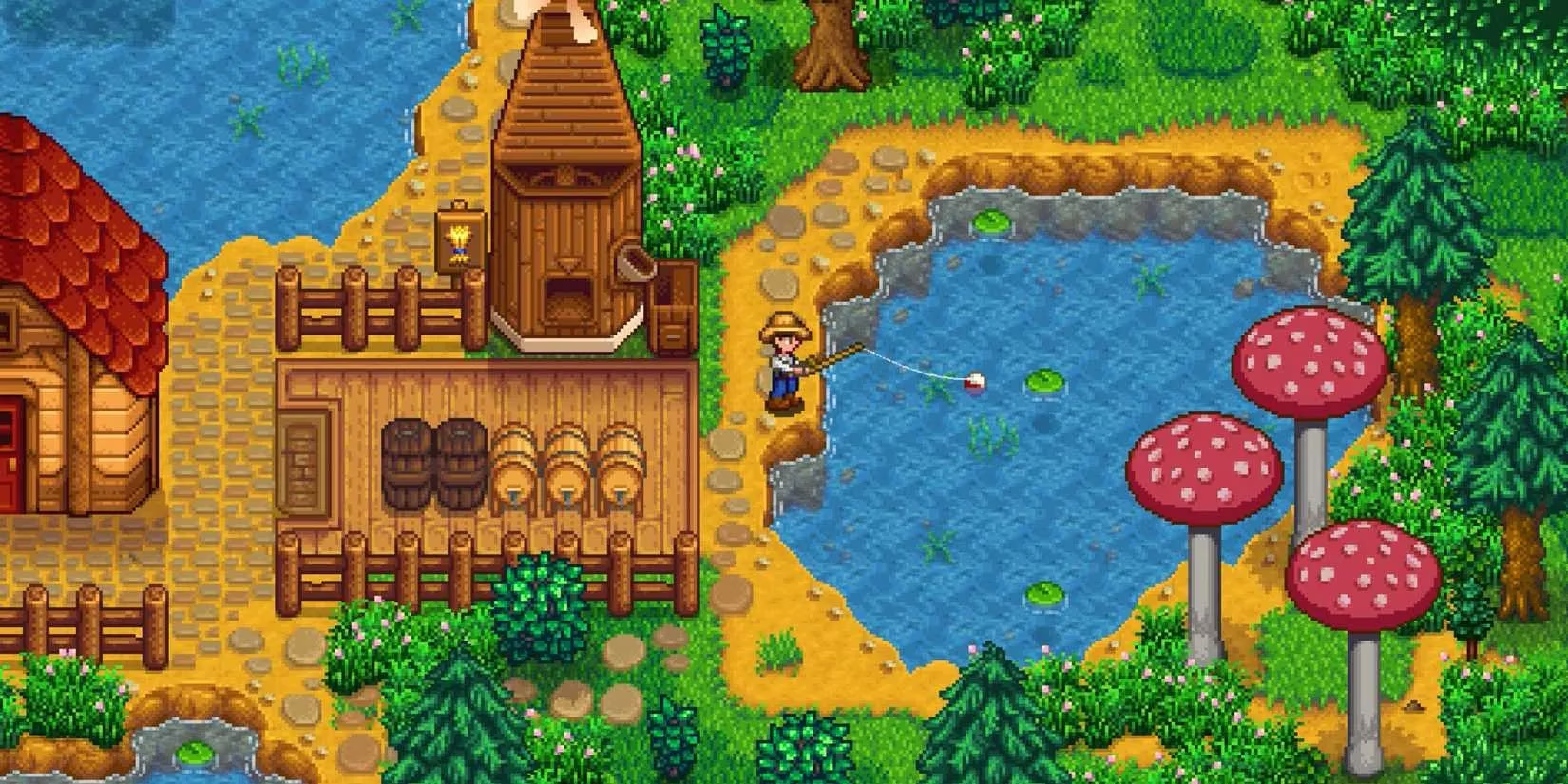
Herein lies the true magic of these games, and why they remain pillars of the cozy genre nearly a decade later. It isn't the wizard in his tower or the junimos in the mines. It's the theology of the mundane. The sacred ritual of planting a seed, tending it, and harvesting its fruit. In a 2026 defined by digital noise and abstract economies, these games offer a liturgy of concrete cause and effect. Water the crop, it grows. Give a gift, friendship deepens. It’s a world that makes sense, where effort translates directly into visible growth, both in your fields and in your heart. The opening letter is the least realistic part, yes. But it's the necessary incantation that transports us to a place where life's complexities are distilled into simple, satisfying loops. We don't play to meet gods; we play to become stewards of our own tiny, comprehensible universe.
A Table of Longings
What do we truly seek when we boot up the farm? Let's break down the fantasy versus our 2026 reality:
| Fantasy Element (In-Game) | 2026 Reality Counterpart | The Core Longing |
|---|---|---|
| ✉️ The Inheritance Letter | 📈 Student Loan Statements / Rent Renewals | Freedom from financial precarity |
| 🌱 Tilling Your Own Land | 🖱️ Clicking Through Tenant Portal Updates | Tangible agency and ownership |
| 🕔 6 AM Rise for Labour | 🕔 6 AM Rise for Commute / Emails | Purposeful physical work |
| 👨🌾 Knowing Your Whole Town | 👥 Algorithmic Social Media Feeds | Genuine, rooted community |
| 📈 Clear Growth & Seasons | 🔄 Abstract Career Ladders & KPIs | Visible, meaningful progress |
This table isn't just a comparison; it's a diagnosis. Our attraction to these pixelated pastures is a profound form of cultural homesickness for rhythms of life that modernity has paved over.
The Fields We Crave
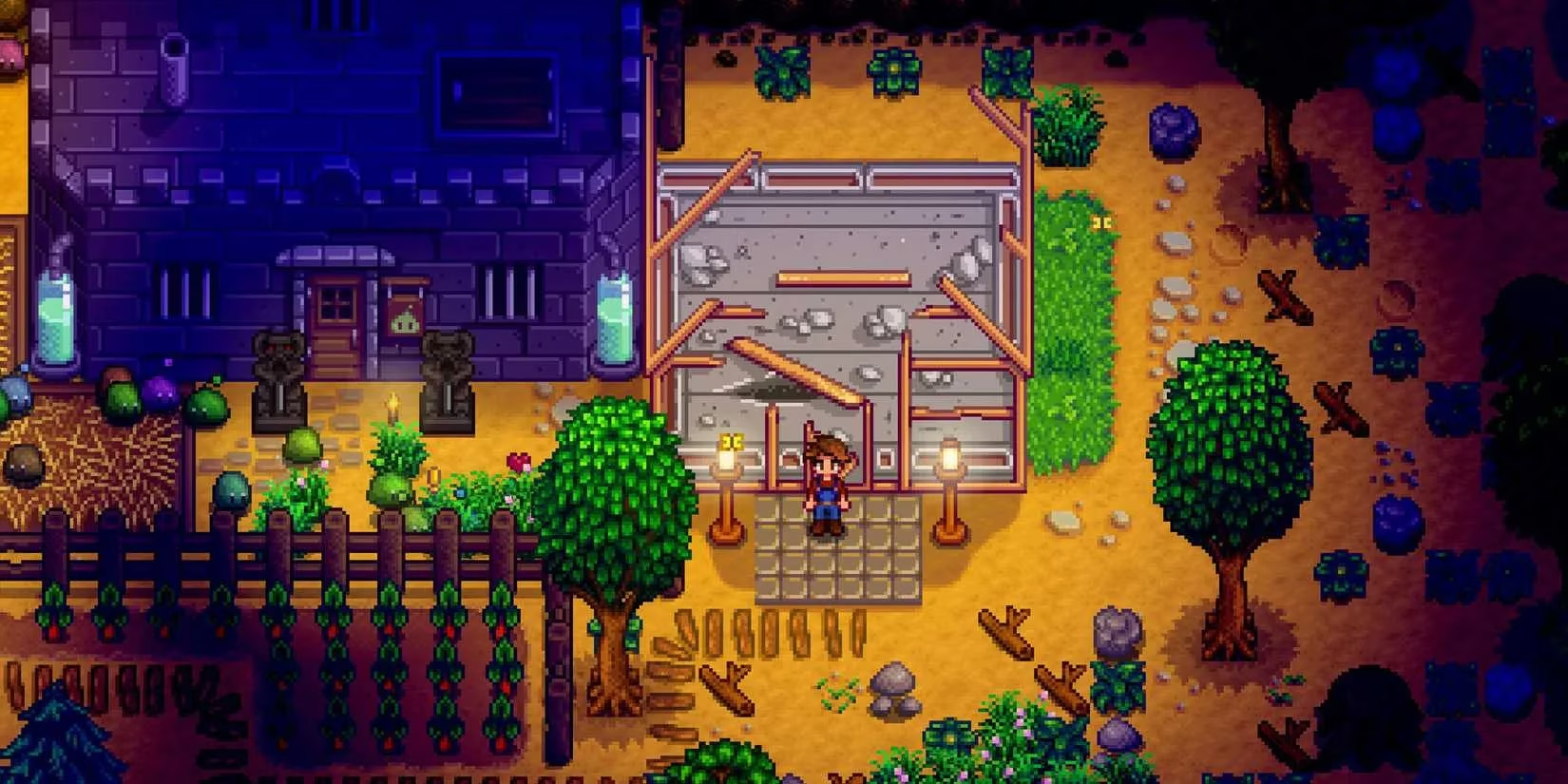
They say the children yearn for the mines. In 2026, I believe the adults—weary, connected, and overwhelmed—crave the fields. Not necessarily literal agricultural fields, but the metaphorical space they represent: a plot of existence where our effort has direct, nourishing consequence. A place where the clock is set by the sun, not notifications. Where your wealth is measured in full jars of jam and strong relationships, not digits in an app. The game gives us that. It lets us practice a kind of mindful sovereignty over a small world. Every repaired fence, every gifted amethyst to the gloomy goth, every harvested pumpkin is a quiet rebellion against the chaos and abstraction of our daily lives.
So, no, the letter will never come. My inheritance is this controller, this save file, this digital plot of land I've nurtured for years. And maybe that's enough. Maybe in tending these pixelated crops, I am cultivating patience. In befriending these coded villagers, I am remembering the value of slow connection. In building this farm from weeds to wonder, I am keeping alive the ember of a simpler dream. The fantasy isn't about escaping to a farm; it's about remembering that within us all, there is still soil waiting for a seed. What are we planting in our own lives, if not pumpkins? 🌱
Leave a Comment
0 Comments