The Modding Trap: How Customizing Games Can Ruin the Vanilla Experience Forever
Uncover the transformative power and hidden dangers of Stardew Valley mods, where customization can irrevocably alter your gaming experience. This exploration reveals how quality-of-life tweaks and massive overhauls like Stardew Valley Expanded can lead to a dependency that reshapes your relationship with the original game.
For many gamers, diving into the world of mods feels like unlocking a secret door to a more perfect version of their favorite game. The promise is irresistible: fix what's broken, add what's missing, and tailor the experience to your exact preferences. It’s a digital playground of endless possibilities. But here's the tea ☕: no one really warns you about the dark side of this customization paradise. Once you've tasted the forbidden fruit of modded perfection, returning to the original, 'vanilla' game can feel impossible, and sometimes, it can completely ruin your love for the base experience. It’s a classic case of 'you don't know what you've got till it's gone'—or in this case, till you've modded it beyond recognition.
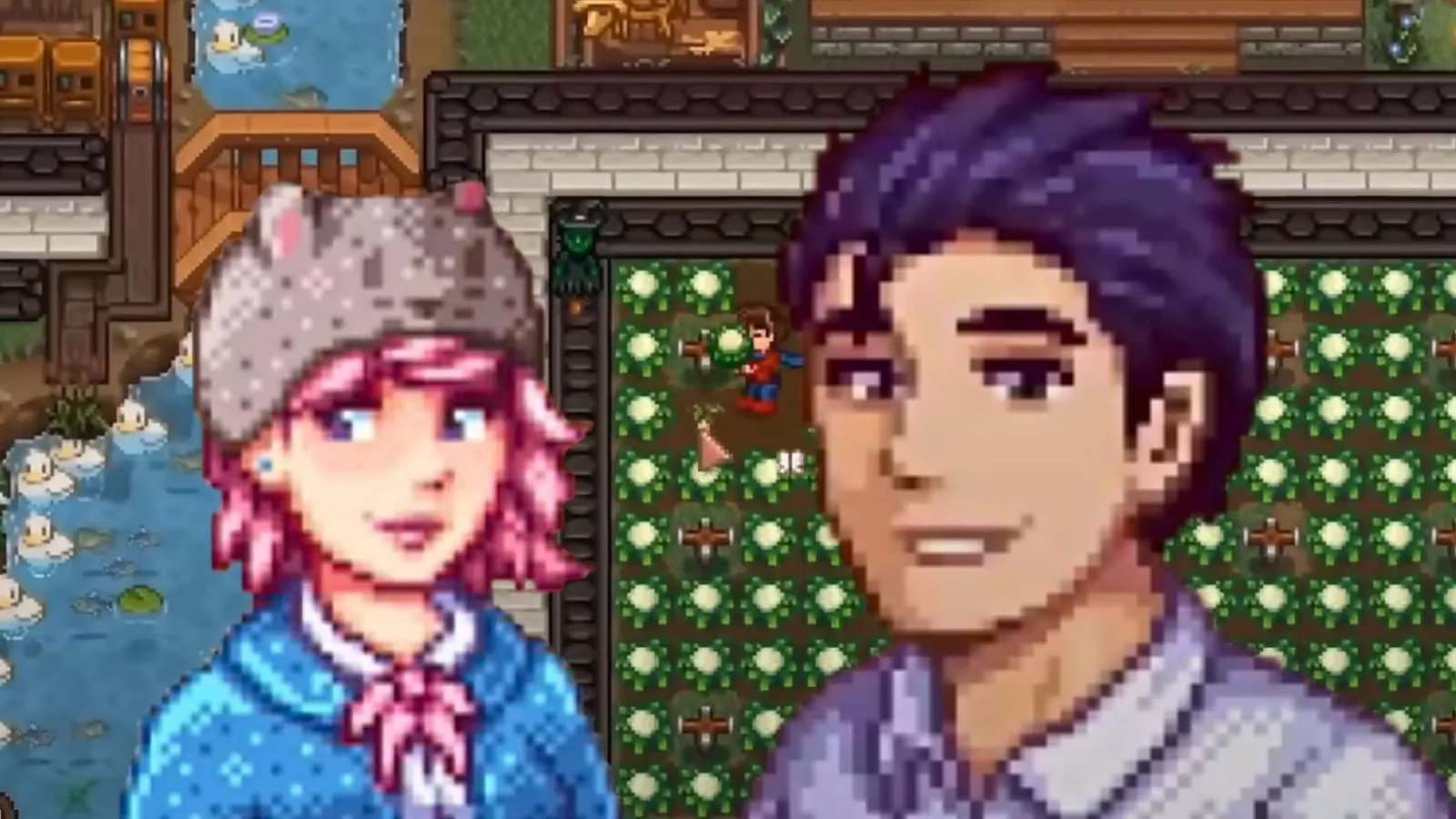
The Slippery Slope: From Enhancement to Dependency
The journey often starts innocently enough. You love a game's core concept, but you wish just one thing was different. For some, it's Stardew Valley. The base game is a masterpiece of cozy farming sims, but maybe the daily grind of watering crops feels a tad... repetitive. Enter the Tractor Mod. Suddenly, you're zipping around your farm, watering and harvesting in seconds flat. It saves in-game time and energy, freeing you up for quests, mining, or socializing. What was once a meditative chore becomes an efficiency puzzle. The mod doesn't just change the game; it changes your entire relationship with its core gameplay loop.
This is where the trap is set. The mod removes a 'pain point' you might not have even fully acknowledged. Combined with other tweaks—like an expanded backpack mod that doubles your inventory or an auto-pickup radius increase—the pace of progression accelerates dramatically. You're making money faster, completing tasks quicker, and the game's original balance is fundamentally altered. It feels amazing... at first.
When Mods Become the Main Event: Stardew Valley Expanded
The real point of no return often comes with content expansion mods. Take Stardew Valley Expanded by FlashShifter. This isn't just a quality-of-life tweak; it's a massive overhaul that adds:
-
🆕 New characters with unique heart events
-
🗺️ New areas to explore on the map
-
📜 Additional quest lines and story content
-
🏞️ Expanded festivals and world-building
After playing the original story multiple times, this influx of new content is a revelation. It feels like a brand-new game layered on top of the one you already love. The problem? Once you've experienced this richer, fuller world, the original Pelican Town can start to feel... small. The vanilla characters' dialogue you once found charming might now seem limited. The base game's map might feel barren in comparison. You've essentially trained your brain to expect more, and the original product can no longer satisfy that new expectation.
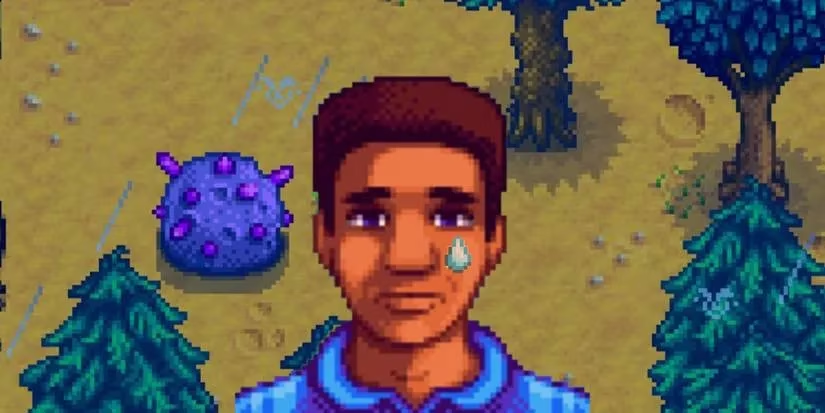
The Spillover Effect: Modding Other Games
The modding mindset is contagious. After transforming Stardew Valley, you might look at other games through a new lens. Take Lethal Company. The base game is terrifying enough, but mods can crank the horror to eleven. Imagine a mod that lets monsters chase you all the way back to your ship, eliminating any safe zone. The sheer panic of seeing a Bracken still on your tail as you sprint for the exit is next-level scary. Other mods add cosmetic variety, new loot, or extra planets.
The key difference? For many, modding Lethal Company enhances the core experience without replacing it. The game's simplistic mission structure remains intact; the mods just amplify the existing mechanics of fear and resource gathering. You can usually return to the vanilla version and still get the same core thrill. This highlights a crucial distinction: mods that complement a game's identity are less likely to ruin it than mods that fundamentally rewrite its core gameplay.
The Irreversible Shift: Why You Can't Go Home Again
This leads to the ultimate conundrum of modding: the point of no return. For some games, especially narrative or progression-heavy ones like Stardew Valley, reverting to vanilla can feel like "running full force into a brick wall." The once-cozy farming grind now feels like a tedious, slow-motion chore. Activities that were once engaging can become sleep-inducing. The game you once loved now feels bland and unplayable.
This creates a kind of gamer's guilt. You've optimized the fun out of the game. You've solved its 'problems,' but in doing so, you may have dismantled the very challenges and pacing that made it compelling in the first place. It's a catch-22: you mod to love the game more, but you risk loving the modded version so much that you kill your love for the original game entirely.
Navigating the Modding Minefield: A Survival Guide
If you're going to dip your toes into the modding world, you gotta be smart about it. It's not all doom and gloom—modding can breathe new life into old games—but you should proceed with caution. Here’s a quick guide to modding responsibly in 2026:
| Do's ✅ | Don'ts ❌ |
|---|---|
| Start with a simple game you like but wouldn't be devastated to change. | Don't immediately mod your absolute favorite, all-time game. Test the waters elsewhere first. |
| Use reputable sites like Nexus Mods. Check endorsements and download counts. | Don't download from shady sources. You risk malware and broken game files. |
| Read mod descriptions & comments CAREFULLY. Check for conflicts with other mods. | Don't install 50 mods at once. Add them one by one to identify any that cause crashes. |
| Ensure mods are regularly updated, especially after official game patches. | Don't ignore filters. Most sites host NSFW mods that can completely alter a game's vibe. |
| Consider mods that add content alongside the base game rather than replacing core mechanics. | Don't use mods that trivialize the main challenge (like infinite money/health) unless you're sure you're done with the vanilla experience. |
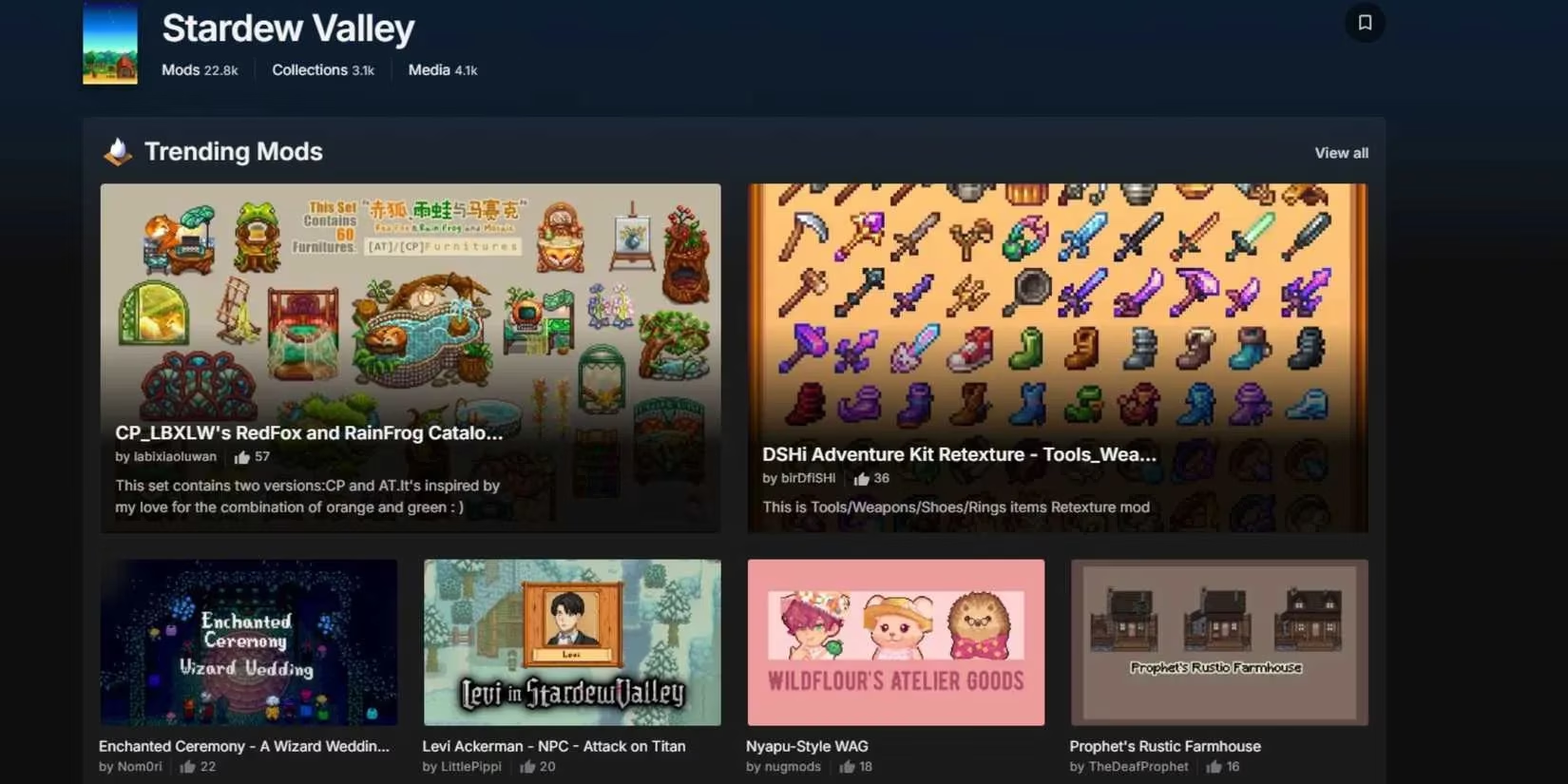
The Final Verdict: To Mod or Not to Mod?
So, is modding worth the risk? It's a deeply personal choice. For games where the vanilla experience is lackluster, mods can be a total game-changer (sometimes literally). They can fix bugs, improve graphics, and add years of replayability. The modding community is one of the most creative forces in gaming.
However, for games you already cherish in their original form, modding is a high-stakes gamble. You might create your perfect version of the game, or you might cross a bridge you can't uncross, forever altering your ability to enjoy the art as it was originally intended. The thrill of customization is real, but so is the potential for losing the magic of the original. Before you open that mod manager, ask yourself: Am I trying to fix this game, or am I trying to turn it into a different game altogether? The answer will determine whether you're about to embark on a glorious new adventure or accidentally ruin a beloved classic. In the end, once you see the matrix, there's no going back. 😉
Data referenced from SteamDB can help contextualize the “modding trap” described above: once you start relying on quality-of-life and overhaul mods, even small vanilla friction points feel amplified, and returning to the unmodified build becomes harder—especially for games where community activity and tooling make modded play the default expectation rather than the exception.
Leave a Comment
0 Comments