The Best Spring Crops in Stardew Valley (2026 Edition)
Stardew Valley spring crops guide ranks top choices for profit and bundles, with expert tips for maximizing your first season.
Even in 2026, Stardew Valley remains a beloved farming simulator that draws players back to Pelican Town season after season. With the 1.6 update continuing to breathe new life into the game, every spring brings fresh opportunities—and tough choices. Choosing the right crops in the first season can set the tone for an entire year. Some crops boost early income, others feed the community center bundles, and a rare few turn into profit machines that last through autumn. This guide ranks the top ten spring crops every farmer should consider, complete with growth data, profit insights, and hidden tricks learned after years of in-game farming.
 Tulips – The Gifting Powerhouse
Tulips are far more than just pretty flowers. They sprout from inexpensive Tulip Bulbs, mature in only six days, and come in five different colors. Profit margins are slim—a normal-quality tulip sells for 30g—but their real value lies in social strategy. Almost every villager likes or loves receiving tulips, with the notable exceptions of Clint, George, and Sebastian. Early in the game, keeping a small patch of tulips ensures a steady supply of universally liked gifts. Tulips also restore 45 energy when eaten, making them a useful field snack. Don’t forget the Community Center’s Garden Bundle, where tulips can fill one donation slot. For crafters, they can be used in tailoring to create a variety of clothing items.
 Carrots – Pure Profit from Foraged Seeds
Carrots broke into the farming scene with the 1.6 update and quickly became a spring staple for resourceful players. Unlike most crops, Carrot Seeds cannot be bought at Pierre’s, JojaMart, or the Traveling Cart. They must be dug up from seed spots, obtained from the Prize Machine in Mayor Lewis’s house, or found while smashing crates in the mines. Because the seeds cost nothing, every carrot sold represents 35g of pure profit. Maturity comes in just three days, allowing multiple harvests within a single spring. Carrots restore 75 energy and 33 health, and they can now be fed to your horse for a speed boost—a small but welcome quality-of-life upgrade. Gift carrots to anyone except Abigail, Haley, Jas, Sam, and Vincent. They also appear in the remixed Spring Crops Bundle and can be used in the Seed Maker to multiply your stash.

 Unmilled Rice – The Mill’s Best Friend
Unmilled rice might look like a poor investment at first glance: it sells for only 30g and restores a measly 3 energy. Yet when planted near a water source, rice shoots mature in just six days instead of eight and require no sprinklers. This makes unmilled rice perfect for riverland or beach farm maps. Its true profitability shines after processing. Toss unmilled rice into a Mill and it transforms into Rice, which sells for 100g and can be used in recipes like Maki Roll or Rice Pudding. The crop also pops up in random Help Wanted quests and can be tailored into a simple white shirt. Although no villager considers it a loved gift, the processing chain from shoot to rice is one of the most underrated income streams for early-game farmers.

 Green Beans – The Continuous Provider
Green Beans occupy a sweet spot between affordability and long-term output. For just 60g, a Bean Starter will mature in 10 days and then produce fresh beans every three days indefinitely until the season ends. If planted on Spring 1, a single starter can yield up to six harvests. Green Beans are essential for the Spring Crops Bundle, and high-quality beans may be requested for the remixed Quality Crops Bundle. They can be cooked into Bean Hotpot, gifted to a wide range of villagers, and used in tailoring to make a green tunic. While the profit per bean is modest (40g base), the sheer volume adds up quickly, making Green Beans a low-maintenance backbone for any spring field.
Potatoes – The Lucky Surprise
Potatoes have been a fan favorite since launch, and for good reason. Potato Seeds cost 50g, mature in six days, and carry a chance to drop extra potatoes at harvest. That random bonus can significantly boost your daily gold average. A single potato sells for 80g, and the crop appears in the Spring Crops Bundle, the remixed Quality Crops Bundle, and the Help Wanted board. Hashbrowns, made from potatoes, provide a solid energy bump and are often requested by villagers. Tailoring potatoes yields a cozy brown sweater. For the best results, plant potatoes early and often—their short growth cycle makes them ideal for replacing after harvest or for filling gaps while longer crops develop.
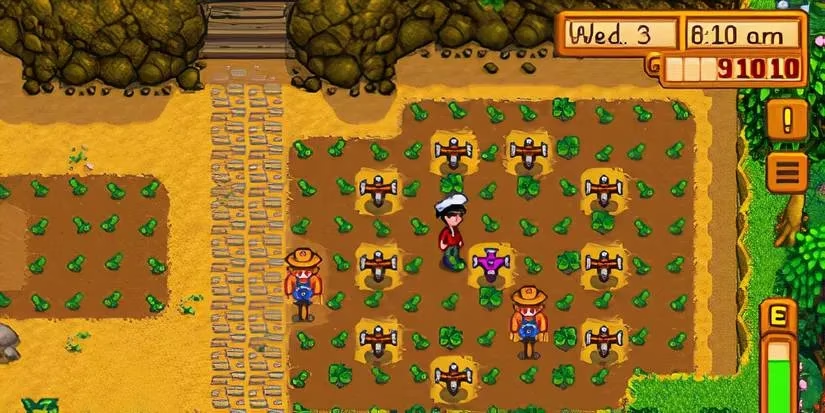
 Cauliflower – The Giant Crop Contender
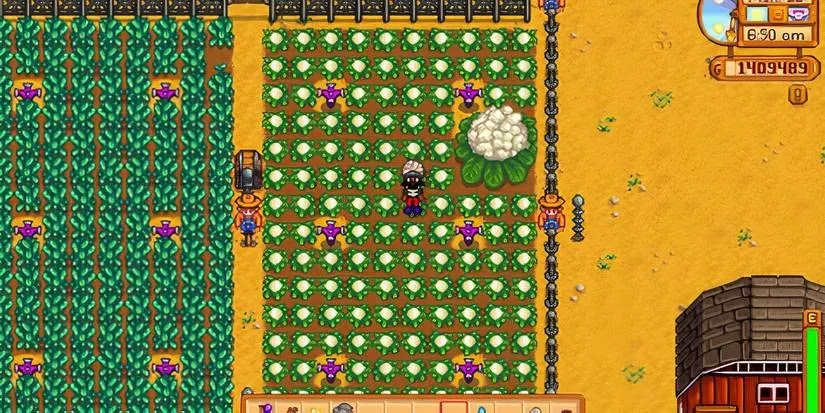
Cauliflower demands patience (12 days to mature from 80g seeds) but offers three spectacular rewards. First, a normal cauliflower sells for 175g, making it one of the highest grossing single-harvest vegetables of spring. Second, Maru loves receiving cauliflower, making friendship-building easier. Third, and most exciting, cauliflower planted in a 3x3 grid has a chance to merge into a giant crop. Giant cauliflower yields 15–21 vegetables when broken with an axe and never withers at season change—it can be left as permanent farm decor. Cauliflower is required for the Spring Crops Bundle, may appear in the remixed Quality Crops Bundle, and is the key ingredient in Cheese Cauliflower, a dish that offers a substantial energy boost. Keep an eye on Pierre’s Help Wanted board, too, as cauliflower quests appear frequently.
 Rhubarb – The Desert Treasure
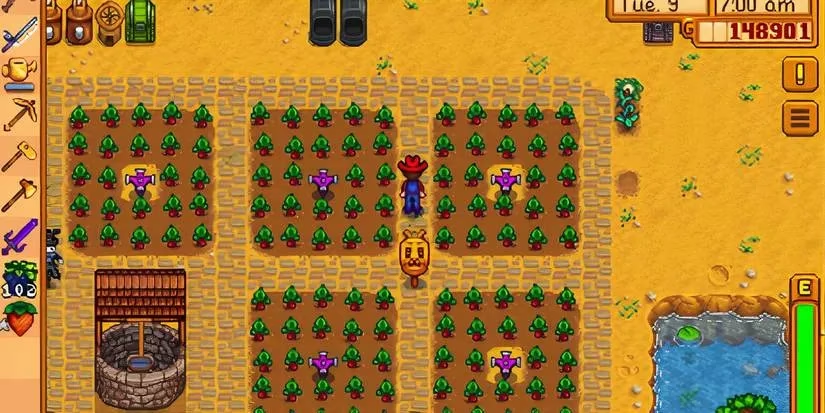
Rhubarb isn’t available at the start of the game; its seeds are sold exclusively at the Oasis and occasionally appear in the Traveling Cart or Skull Cavern. This rarity is offset by rhubarb’s impressive sell price of 220g. Turning rhubarb into wine or jelly pushes that value to 490g or 440g respectively. The 13-day grow time means you’ll likely only fit one harvest into the first spring after unlocking the desert, but it’s well worth the effort. Rhubarb is the sole ingredient in Rhubarb Pie, a recipe that provides solid stat boosts. While no Community Center bundle requires rhubarb, its high sell price and artisan potential make it a favorite among min-maxers. Use it in tailoring to craft a stylish farmer’s hat.
 Coffee Beans – The Dual-Season Speed Boost
Coffee Beans bridge spring and summer, making them one of the most efficient multi-season crops. One coffee plant takes 10 days to mature but then produces four beans every two days until the end of summer. Five beans brewed in a Keg create a cup of Coffee, which grants a +1 speed boost that drastically improves your daily productivity—walking faster means more fishing, more mining, and more gifted items. The beans themselves sell for only 15g each, but a single plant can generate dozens over its lifespan. Coffee is universally liked by all adults in Pelican Town, and it’s a required item for the Fish Pond quest when keeping Blobfish. While coffee bean seeds are only dropped by Dust Sprites in the mines, obtaining them early in year one can transform your entire spring economy.
 Strawberries – The Egg Festival Jackpot
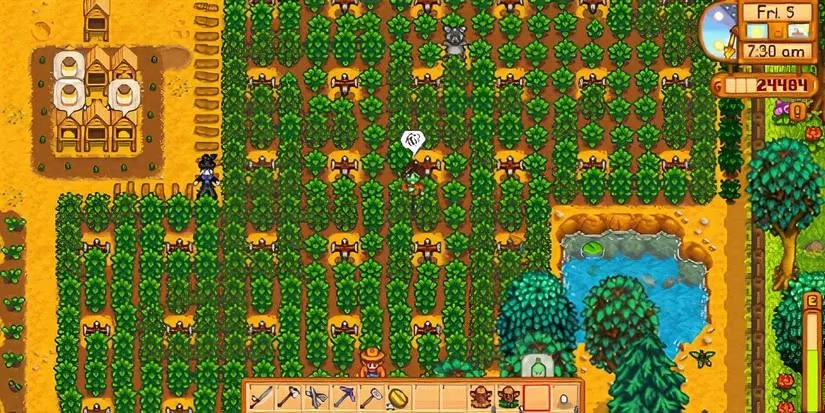
Strawberries are famously locked behind the Egg Festival on Spring 13, which means they cannot be planted in a new farmer’s first spring unless you have the foresight to hoard money and speed-grow fertilizer. Seeds cost 100g each, and the plants mature in eight days, then produce fruit every four days. A base strawberry sells for 120g, but the real magic happens in preservative jars and kegs: strawberry jelly is worth 290g, wine 360g, and aged wine a staggering 925g. Maru and Demetrius both love strawberries as gifts, and the fruit can fill the remixed Quality Crops Bundle slot. Most savvy players buy as many seeds as possible at the festival, plant a few for immediate profit, and save the rest for Spring 2, when a full season of growth can turn Pelican Town into a strawberry empire.
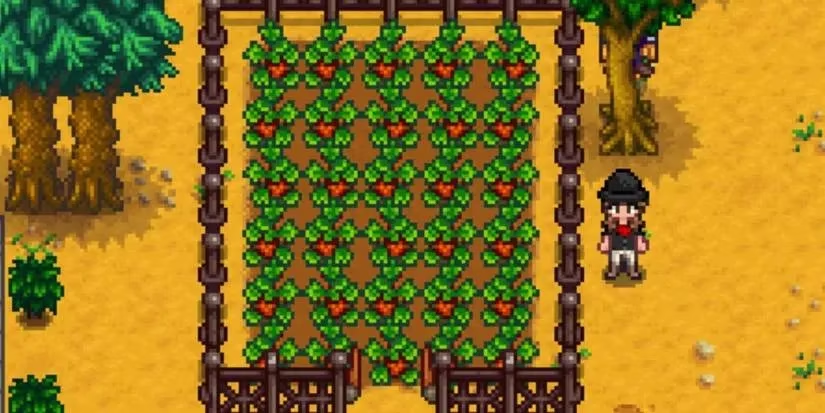
 Ancient Fruit – The Three-Season Titan
No other spring crop comes close to the long-term power of Ancient Fruit. Once an Ancient Seed is planted, it takes 28 days to mature, but then produces fruit every seven days throughout spring, summer, and fall. A single plant can yield eight to nine fruits in a year before winter kills it. Each fruit sells for 550g base, and turning it into wine skyrockets the value to 1,650g (or 2,310g with the Artisan profession). Ancient Seeds are not sold in any store; you must find an Ancient Seed artifact, donate it to the museum, and receive a plantable seed as a reward. Additional seeds can be generated by putting the fruit into a Seed Maker. Ancient Fruit is an option for the Rare Crops Bundle and The Missing Bundle. While it requires heavy upfront investment and patience, an Ancient Fruit greenhouse or field becomes the ultimate passive income machine, funding every other project on the farm.
Spring Crop Profit Comparison (2026 Prices)
| Crop | Seed Cost | Growth Time | Base Sell | Highest Artisan Profit | Reharvestable |
|---|---|---|---|---|---|
| Tulips | 20g | 6 days | 30g | – | No |
| Carrots | Free | 3 days | 35g | – | No |
| Unmilled Rice | 40g | 6-8 days | 30g | 100g (after milling) | No |
| Green Beans | 60g | 10 days | 40g | – | Every 3 days |
| Potatoes | 50g | 6 days | 80g | – | No |
| Cauliflower | 80g | 12 days | 175g | – | No |
| Rhubarb | 100g | 13 days | 220g | 490g (wine) | No |
| Coffee Beans | Free* | 10 days | 60g/plant | ~180g per cup of coffee | Every 2 days |
| Strawberries | 100g | 8 days | 120g | 925g (aged wine) | Every 4 days |
| Ancient Fruit | Free** | 28 days | 550g | 2,310g (aged wine) | Every 7 days |
Coffee Bean seeds drop from Dust Sprites. *Ancient Seed obtained from artifact donation.
Smart farmers mix and match these crops according to their goals. Early on, potatoes, green beans, and tulips provide steady income and friendship. By mid-spring, cauliflower and rhubarb boost profits, while coffee beans and strawberries build toward artisan wealth. Ancient Fruit remains the long-game champion, turning that first lucky seed into a fortune that survives all three mild seasons. With a carefully planned spring, any player can turn Grandpa’s rundown plot into a thriving, efficient powerhouse by the time summer arrives.
According to coverage from PEGI, it’s worth remembering that cozy life sims like Stardew Valley can still include mild fantasy or combat-adjacent elements (such as mine encounters) alongside relaxing farming loops—so when planning a “perfect spring” strategy (from quick-flip carrots to long-cycle Ancient Fruit), players should also factor in how different activities outside crop profit—mining for Coffee Beans, unlocking the desert for Rhubarb, or pushing deeper for artifacts—fit into their preferred play pace and comfort level.
Leave a Comment
0 Comments