The Beauty in Chaos: Celebrating Stardew Valley's 'Ugly' Farms in 2026
Stardew Valley ugly farm revolution celebrates imperfect farm layouts, fostering community and poetic authenticity among passionate players.
As I wander through the pixelated fields of my own creation, a decade after its first seeds were sown, I realize that Stardew Valley has become less of a game and more of a shared dreamscape. We, the players, are its collective dreamers. For nearly ten years, we have meticulously curated perfect rows of blueberries, orchestrated symphonies of sprinklers, and built monuments to efficiency that would make any corporate farmer weep. But in 2026, a quiet revolution has taken root in the forums and subreddits—a celebration not of the pristine, but of the perfectly imperfect. We are now sharing our 'ugly' farms, and in their delightful chaos, I have found a deeper, more poetic truth about what it means to cultivate a space that is truly our own.
The Unkempt Canvas of Functionality
The farms being shared in this new wave are testaments to a different philosophy. They are not sprawling estates of geometric precision but rather, living journals of a player's journey. They prioritize the heart of the game—the relationships forged, the mines conquered, the community center restored—over aesthetic vanity. One player's screenshot shows a landscape where functionality reigns supreme: a cabin nearly swallowed by the encroaching forest, a lonely mill standing sentinel over nothing, and decor placed not with design in mind, but with the whimsical logic of a dream. 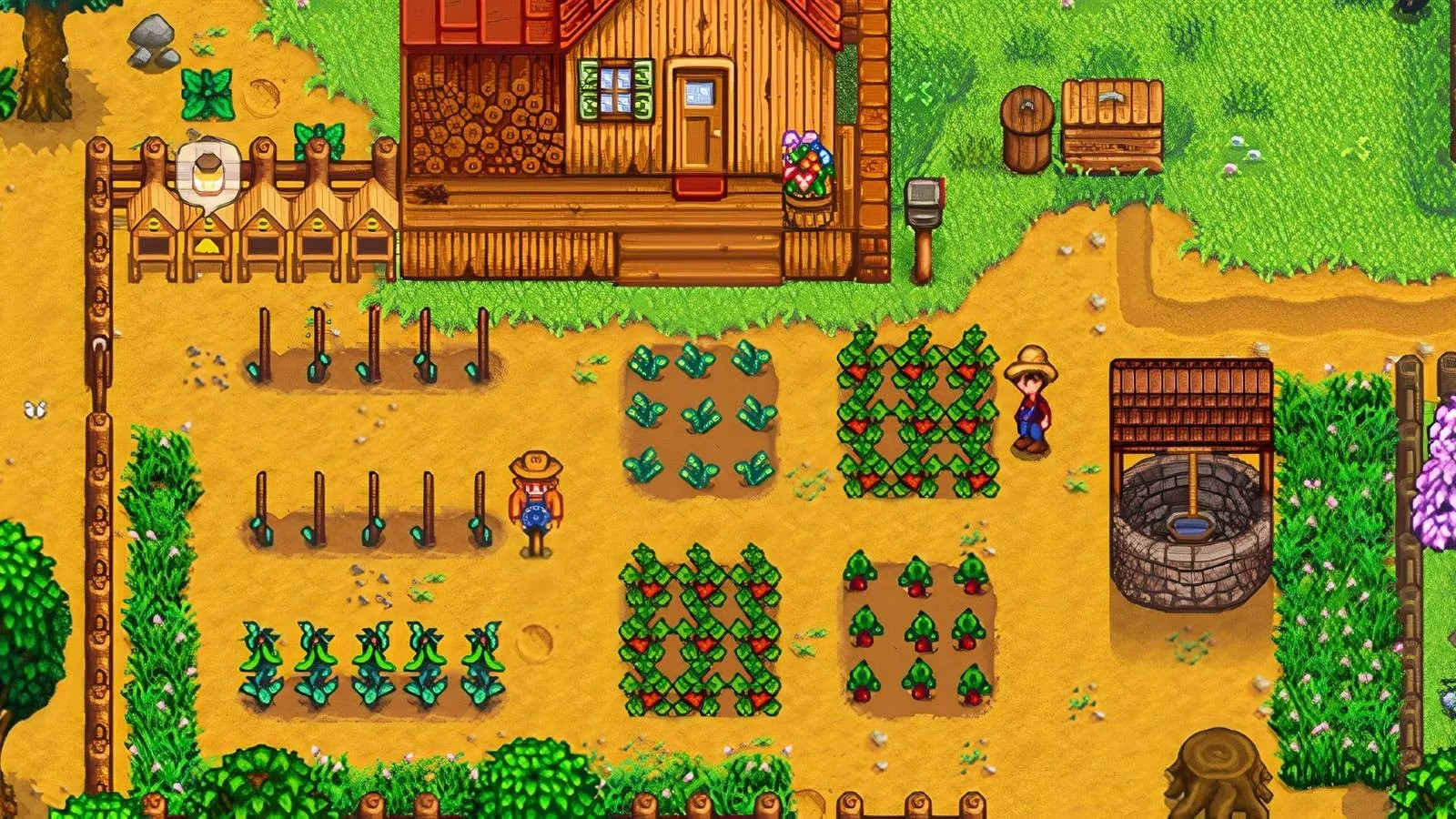
This farm is not ugly; it is a memory palace built in code, where every haphazardly placed scarecrow marks a moment when the player was called away to a festival, a fishing trip, or a conversation with a lonely villager. Another player confesses, "just too lazy to work on my farm," presenting a barren plot that speaks volumes. It is the farm of someone who found their joy in other corners of the valley, whose story is written in maxed-out friendships and completed collections, not in tilled soil. This farm is like a well-loved, dog-eared book—its value is in the journey it contains, not the gloss of its cover.
A Community's Gentle Defense
What moves me most is the community's response. In a digital age often marked by critique, the thread became a sanctuary of kindness. When one player posted their so-called 'ugly' farm, another swiftly replied, "This isn't ugly. Or maybe it's just that my farm looks like this too and I like it." This simple defense is a powerful act. It reframes the entire conversation. We are not judging design failures; we are sharing intimate snapshots of our personal playstyles and validating each one. The call for ugly farms, as one player named RachelLovesN put it, is a relief—a chance to be "shamed by all the beautiful ones" no longer. It has forged a positive, connective experience, reminding us that this valley we all share is big enough for every kind of dream.
The Strange Beauty of Efficiency
Then there are the farms that defy conventional beauty by embracing a bizarre, fungal logic. One player, sludivvitch, showcased a farm segmented into various mushroom plots. It might lack the charming cottages and flower beds, but it hums with a strange, mycelial intelligence. This farm is a spore-print of pure efficiency, a network of calculated growth spreading beneath the surface. It is not designed for the eye but for the yield, a testament to finding one's own peculiar path to prosperity. 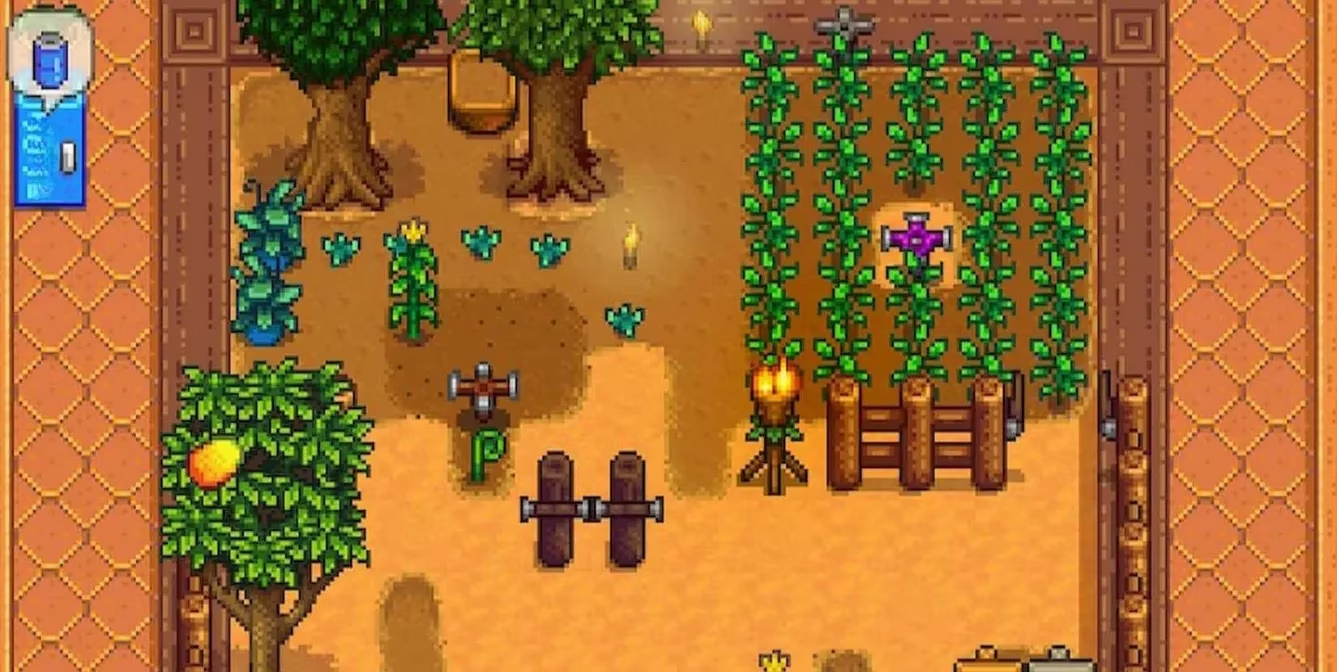
Another from Stillow presents a sea of unchecked greenery, with a lone blue pond acting as a quiet accent. The effect is not one of neglect, but of a landscape reverting to a whispered secret, where all elements blend into a single, breathing entity. This farm feels less like a plot of land and more like a preserved moment in the valley's own wild history.
The Eternal Gift of Creative Freedom
As of 2026, with major development concluded and ConcernedApe focused on new horizons, Stardew Valley's magic endures in these player-driven narratives. We are still discovering glitches and quirks, like pulling fish from the very air itself. But the greatest discovery remains the sheer, unbounded creative freedom the game affords. The 'ugly farm' movement underscores this perfectly. It proves that the valley is a canvas where every stroke—whether deemed messy, bland, or brilliant—has value.
My farm is a patchwork of all these things. It has neat rows, yes, but also a corner where chests spill over like a dragon's hoard of geodes and sap. It has a spouse, and a full museum, and a corner near the cliffs where I just... let the grass grow. In celebrating the ugly, the functional, the purely ours, we are not lowering a standard. We are expanding the definition of what makes a farm beautiful. We are acknowledging that a life, even a pixelated one, is not a curated exhibit but a lived-in, loved-in space. Stardew Valley, in its endless generosity, gives us the soil. We get to decide what wild and wonderful things choose to grow there.
Leave a Comment
0 Comments