How Indie RPGs Revolutionize Storytelling with Creative Risks
Discover how indie RPGs like Disco Elysium, Bastion, and Undertale revolutionize storytelling with innovative choices and immersive worlds that captivate players.
You know, as a gamer who's been diving into RPGs for years, I've always found it fascinating how indie developers just go all out with their storytelling. While big AAA studios are stuck pleasing shareholders and sticking to safe formulas, indie teams have the freedom to experiment. And boy, does that pay off! It's like they're whispering secrets directly to us players, making each game a personal journey. I mean, think about it – in a world where budgets rule, these smaller studios craft narratives that aren't just stories; they're living, breathing worlds shaped by our choices. Let me share some gems that blew my mind, where creativity isn't just a bonus; it's the whole point.
First up, let's talk about Disco Elysium. Oh man, this game is wild! As I stepped into the shoes of detective Harry du Bois, I realized it wasn't about following a script; it was about building my own path. Depending on where I invested my skills, the whole story twisted and turned. For instance, if I pumped points into Inland Empire, suddenly I was chatting with my tie – yeah, you heard that right! That little piece of fabric had its own sassy dialogue, guiding me to hidden routes and creatures I'd never spot otherwise. It's crazy how one playthrough can feel like a gritty noir tale, while another is a supernatural rollercoaster. And the best part? You can't see everything in one go, so I've replayed it multiple times, each run a fresh adventure. Talk about replay value! 😊
| Game Feature | Impact on Story | Why It's Awesome |
|---|---|---|
| Skill-based choices | Changes narrative direction | Unlocks unique interactions like talking tie |
| Multiple playthroughs | Different experiences each time | Encourages experimentation |
Now, shifting gears to Bastion, the debut from Supergiant Games. I remember booting this up and being instantly hooked by the narrator, Rucks. His voice, smooth as butter, didn't just describe the action; he reacted to everything I did. If I paused to smash some scenery for loot, he'd quip, "The Kid stops to let off some steam." Or when I picked a weapon combo, he'd note my love for explosives. It's subtle, but wow, did it pull me in! This attention to detail made the post-Calamity world feel alive, like Rucks was a buddy watching over my shoulder. The immersion was so deep, I found myself trying weird actions just to hear his commentary. That's indie magic right there – turning simple choices into storytelling gold.
Moving on to Undertale, and let me tell you, this one's a masterpiece of player agency. 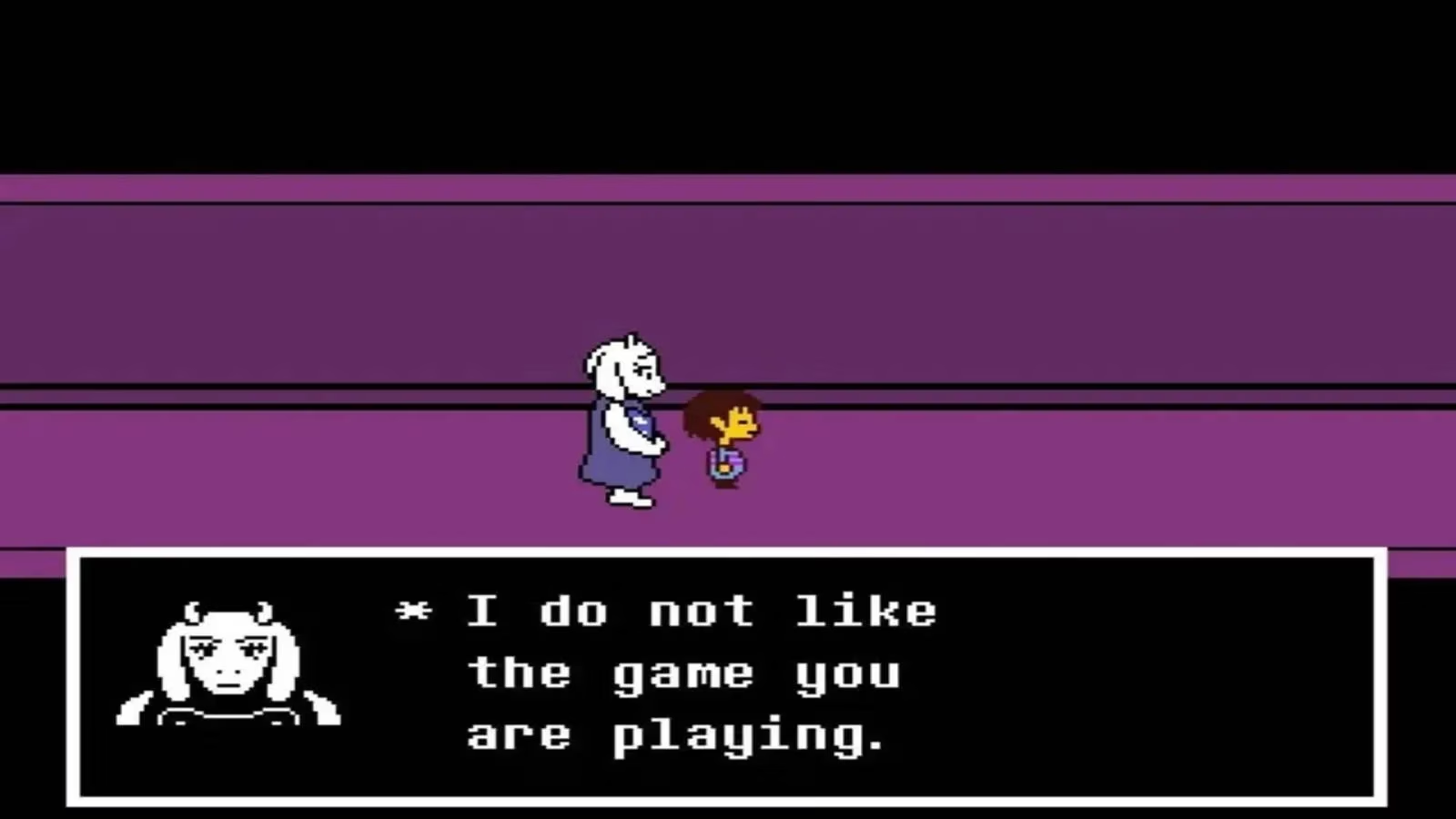 Unlike typical RPGs where battles are just for leveling up, here every fight shapes the plot. I could go full pacifist and spare every foe, or embrace chaos and slay them all. The ending? It morphs based on my approach. After one playthrough where I befriended everyone, I jumped back in for a genocide run – and the difference was night and day. Characters remembered my actions, and the pixel art added this charming, nostalgic vibe. It's a game that surprises at every turn, proving you don't need epic length to deliver impact. Just pure, unadulterated creativity.
-
Key takeaways from Undertale:
-
Battle choices directly influence story outcomes.
-
Multiple endings encourage replays with different strategies.
-
Simple mechanics, huge emotional payoff.
Next, Citizen Sleeper brings a dice-rolling twist to the cyberpunk scene. As a Sleeper in this futuristic world, my life hung on every roll of the dice. Sounds old-school, right? But it worked beautifully, adding tension where a bad roll could derail my plans. Through the Clock system, I monitored friendships and story threads, with decisions rippling through the narrative. What gripped me was how much control I had, yet the dice kept things unpredictable. One moment, I'd ace a crucial check; the next, a flop sent my plans spiraling. It’s like life – full of chances, making every playthrough uniquely mine. 🎲
Finally, there's Hylics, a game that's all about leaving things unsaid. In this bizarre 2015 adventure, NPCs barely speak, so I had to piece together the story from context clues in a surreal world. Fighting Gibby, the Moon King, felt like solving a puzzle with no clear answers. The turn-based battles and vehicle travel were classic RPG staples, but the narrative? It was a blank canvas, inviting me to fill in the gaps. That vagueness made it intriguing – I spent hours theorizing with friends about what it all meant. Sometimes, less is more, and Hylics nails that, proving that mysteries can be more engaging than spoon-fed plots.
In the end, these indie RPGs show that when developers take risks with storytelling, they create unforgettable experiences. It's not about big budgets; it's about heart and innovation. So next time you pick up a game, remember – the best stories are the ones you help write. 😊
Leave a Comment
0 Comments