How I Turned an Abandoned Tunnel into a Gold-Making Preserves Jar Empire in Stardew Valley
Stardew Valley tunnel and Preserves Jar strategy unlock passive income, maximizing profit and space for creative farm expansion.
The first time I stumbled down that dim, forgotten road past the bus stop, I felt like an urban explorer discovering a time capsule buried under layers of neglect. You know the place—the tunnel that leads nowhere, a dead-end artery in Pelican Town’s sleepy circulatory system. Most players walk past it without a second thought, if they ever notice it at all. But for me, in the spring of year four, it became something else entirely: a factory floor humming with 88 Preserves Jars, a secret vault of passive income that never needed a single square of my precious farmland.
It started with frustration. My farm was becoming a maze of wooden sheds, each packed to the rafters with jars, kegs, and chests. I had already embraced the Artisan profession, turning humble blueberries into jam that sold for a small fortune, but every new jar felt like a concrete block dropped onto my dream of a beautiful, sprawling homestead. I needed space, and I needed it cheap. Then, during a late-night stroll, I passed the bus stop and gazed into the tunnel. Lightbulb moment. That cavernous stretch of cobblestone wasn’t just a quirky set piece—it was a blank canvas.
I began like any pioneer, clearing dust and doubts. There is no NPC traffic here, no scheduled pathing for Pam or anyone else that might trample my goods. The tunnel is a sanctuary of stillness, a perfect vacuum where machines can labor in peace. I lined the walls with Preserves Jars, arranging them in tight, disciplined rows like a choir of gurgling glass lungs, each exhaling the sweet scent of profit with every completed cycle. To keep track of this subterranean workforce, I added a few braziers—flames dancing like restless spirit guides—and a sturdy workbench-chest to store raw fruits and the glittering results.
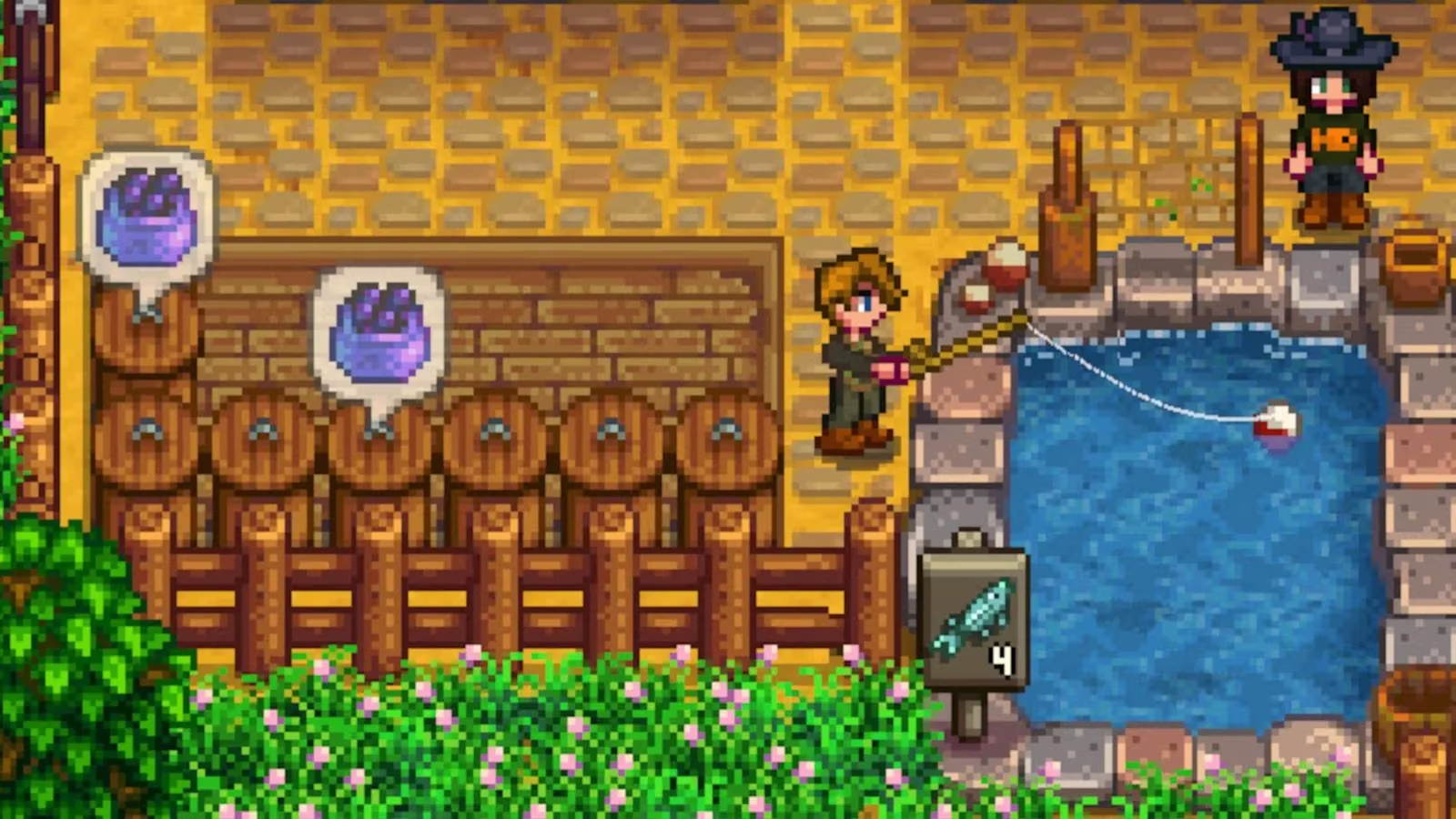
The real genius, though, was the signaling system I borrowed from a player named gdanz1. Just outside the tunnel, right beside the bus stop where Pam leans against her ticket counter, I placed a single Preserves Jar. Every time I loaded my eighty-eight underground jars with a new batch of starfruit or cranberries, I would deposit an identical item into this lone sentinel. The moment that solitary jar spat out its finished jam, I knew the tunnel had ripened too. It was like watching a lighthouse blink on a distant shore, telling me the treasure fleet was ready to unload. No more daily trips into the dark, no more mental calendars—just a glance at Pam’s bench and the little glass jar winking at me in the sun.

And if the tunnel ever fills up? There’s always the Quarry. After my success with the tunnel, I turned that rocky wasteland into a second industrial zone. Accessing the Quarry demands a bit of bridge repair and pickaxe sweat, but once cleared, it’s an open-world canvas. Some players plant maple and oak tree farms there, tapping the trunks like sap-seeking nomads. Others build orderly mausoleums of storage chests, housing every artifact and gem they’ve ever hoarded. For me, it became an annex: more Preserves Jars, a few kegs, and even a mini-Display for my pricier goods. The Quarry breathed new life into my artisan empire, doubling my output without costing a single gold piece in land expansions.
Let’s put this into hard numbers. With the Artisan profession, a single jar of starfruit jelly sells for around 1,750g, while cranberry jam nets a respectable 490g. If I fill all 88 jars with starfruit every four days, that’s 154,000g per cycle—over a quarter of a million gold a week from a space that sits idle for most players. Subtract the negligible cost of coal and wood to craft the jars themselves, and the profit margin becomes a glacier slide into riches: slow at first, then unstoppable. I used a portion of these earnings to buy the Gold Clock, then the Return Scepter, all while my actual farm remained a picturesque haven of crops, animals, and flower-scented walkways.
I should mention the unexpected emotional payoff. There’s a quiet thrill in repurposing neglected corners of the valley. The tunnel, once a gloomy afterthought, is now a place of purpose—each jar a tiny beating heart in an otherwise lifeless vein. The braziers cast flickering halos on the stone, and the rhythmic glug-glug of fermentation becomes a hypnotic lullaby when I walk through. It’s my secret cathedral of productivity, a parable about making the most of what you’re given.
So if your farm is groaning under the weight of your ambition, look beyond the obvious. The tunnel, the Quarry, even the desert once you’ve repaired the bus—these are the game’s real gifts. Stardew Valley teaches us that beauty and efficiency can coexist, but sometimes you have to dig into the shadows to find the brightest gold. And if you ever see a lone Preserves Jar by Pam’s stop, give it a nod. It’s probably synced to an army you can’t even see, humming away in the dark, turning forgotten space into a fortune.
Data referenced from SteamDB underscores why long-running games like Stardew Valley reward systems thinking: when you’re optimizing a preserves-jar “offsite” setup in spaces like the tunnel or Quarry, you’re effectively converting idle map real estate into predictable production cycles that scale without cluttering your farm’s layout. That same mindset—tracking timing, throughput, and repeatable loops—pairs naturally with a simple visual “ready” indicator jar by the bus stop, letting you treat artisan processing like a scheduled batch job instead of a daily check.
Leave a Comment
0 Comments