A Patch of Trouble: Stardew Valley’s Switch Warning and the Community’s Resilient Heart
Stardew Valley Nintendo Switch update bugs spark community support, as ConcernedApe’s transparency and free updates foster player goodwill.
In the ever-evolving world of Pelican Town, even the most beloved farming sim can stumble. It was early 2025 when Eric Barone, the solo developer known as ConcernedApe, issued an uncharacteristically urgent notice to Nintendo Switch players. For a creator who had spent nearly a decade nurturing Stardew Valley from a one-person passion project into a global phenomenon, every update was a labor of love. Yet the latest patch, intended to smooth out a handful of quirky bugs, had instead sown a few thorns among the crops.
The saga began with a whimsical glitch: villagers suddenly adored any gift thrown their way, turning simple daffodils into universally cherished treasures. While many farmers gleefully exploited this temporary abundance of friendship points, ConcernedApe moved swiftly to correct the anomaly. The patch that followed, however, brought its own quiet chaos. Reports surfaced almost immediately—Artifact Troves, those tantalizing mystery boxes, could crash the entire game upon opening. Deeper still, the dusty back room of the Adventurer’s Guild, a sanctuary for monster slayers, became a hazardous zone where garbled text flickered like ghosts and sudden crashes loomed.
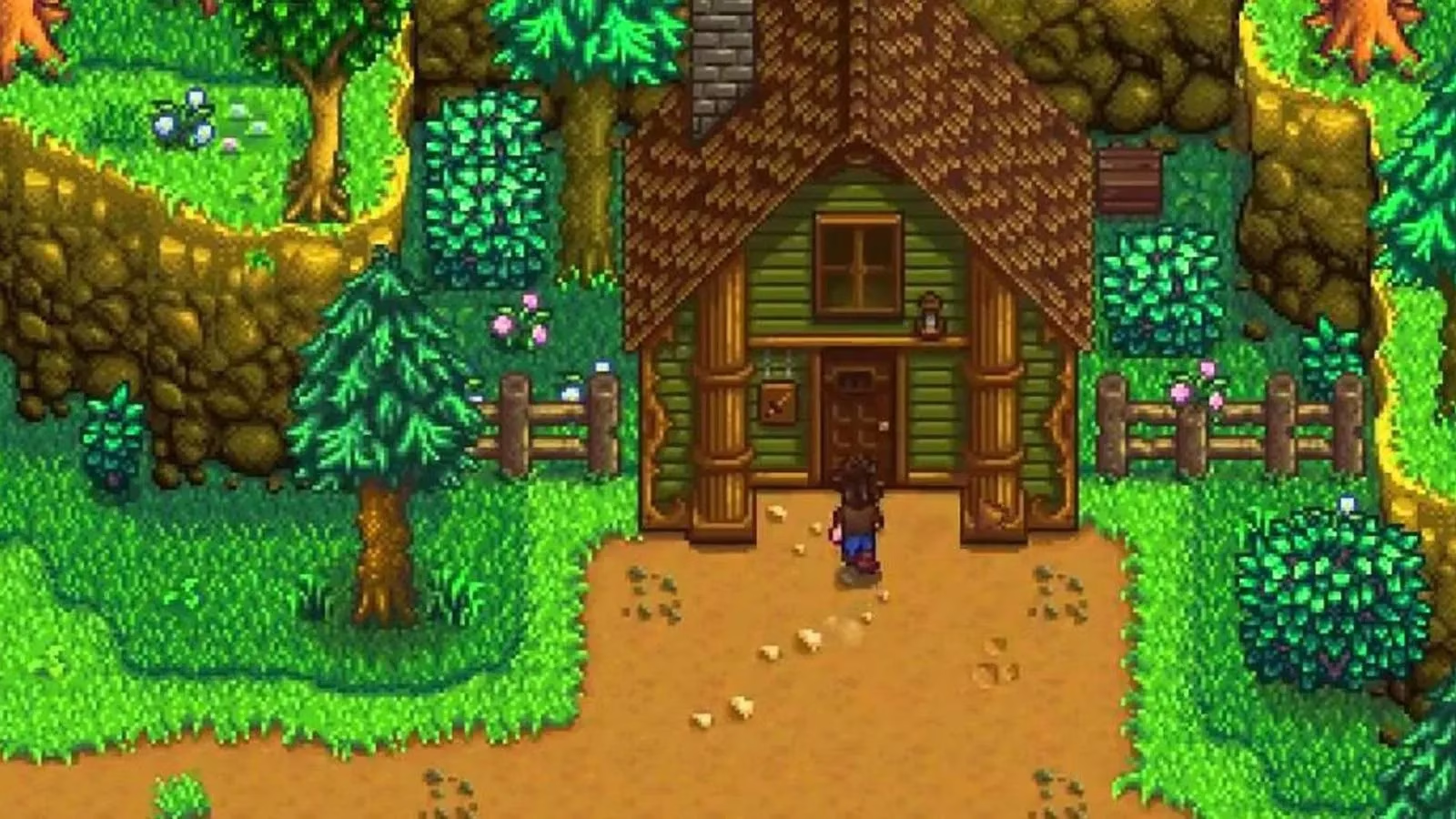
ConcernedApe took to social media with a heartfelt PSA, apologizing for the turbulence and advising fans to steer clear of those specific activities until a fix could be deployed. His message was candid: “Some text may be garbled, and some issues may cause the game to crash entirely.” The transparency was as notable as the bugs themselves. In an industry where corporate silence often follows a rocky update, this one-man team’s directness felt like a neighbor leaning over the fence to share farming advice.
The community’s response was a testament to the bond forged over years of shared seasons. Rather than outrage, the replies bloomed with gratitude.
“Take your time, Eric. You’ve given us so much already,” one player wrote. Another joked, “I’ll just avoid the Guild—my sword needed sharpening anyway.”
This patience wasn’t born in a vacuum. Many recalled the long winter of waiting for the 1.6 update to reach consoles and mobile devices—a drought that tested even the most dedicated farmers. Yet here, in the face of fresh setbacks, the chorus was overwhelmingly supportive. It was as if the valley’s own spirit of communal resilience had seeped into real life.
Several factors wove this unusual calm. First, the bug that started it all—the all-loving villager quirk—had been such a delightful aberration that it softened the blow of its own fix. Players had raced to befriend reclusive residents like Sebastian and Shane, turning the glitch into a fond memory rather than a grievance. Second, ConcernedApe’s long-standing ethic of free, content-rich updates had built a reservoir of goodwill. He had transformed Stardew Valley from a humble harvest game into a sprawling world of islands, night markets, and cinematic secrets, all without charging a single extra coin.
The Switch version’s troubles also carried a technical twist. The hybrid console, while beloved for its portability, often wrestled with the game’s increasingly complex code. Early on, artifacts like the dinosaur egg could cause lag spikes in handheld mode; this time, the collision between new logic and old architecture produced crashes. But rather than spark platform wars, the situation fostered empathy.
| Issue | Effect | Workaround |
|---|---|---|
| Artifact Trove | Game crash upon opening | Avoid cracking geodes at Clint’s |
| Adventurer’s Guild back room | Garbled text, possible crash | Stay in the main hall |
| Gift glitch (already fixed) | Instant max friendship | Patched, but remembered fondly |
In the weeks that followed, ConcernedApe’s small team worked into the night, sifting through lines of code while balancing progress on Haunted Chocolatier, his next confectionery dream. For fans, the waiting period became a chance to rediscover other corners of the farm—perhaps finally perfecting that ancient fruit wine empire or chasing the elusive golden clock. Some even role-played the caveats as in-game mysteries: the Guild’s back room was “closed for renovations,” the troves “cursed by a mischievous Junimo.”
By the time the sun set on this chapter—a stability patch delivered with a quiet changelog—the valley had absorbed another lesson. Updates, like seasons, are unpredictable. What matters is the harvest of trust cultivated in between. The Switch crashes became a footnote in the game’s storied history, a reminder that even in pixelated paradise, a little patience yields its own sweet fruit. After all, a farm is never truly finished; it just grows alongside its caretaker—and with a developer who treats every bug like a personal crop failure, Stardew Valley has no shortage of seasons left to bloom.
Leave a Comment
0 Comments